If you want to know why your electricity or gas bill is so high, start with one system: your HVAC. Heating and cooling is almost always the single largest category of energy use in a California home. So while new windows and insulation help, the fastest way to move the needle on your bill is usually the system that heats and cools your air.
Here's the honest, homeowner's guide to HVAC and heat pumps in California — what actually drives your bill, when an upgrade pays off, and how to find out what you may qualify for.
Why your HVAC is the biggest lever on your bill
Most California homes still run one of two setups:
- A gas furnace for heat plus a separate air conditioner for cooling, or
- An older electric AC paired with electric or gas heat
If that equipment is 12–20 years old, it's running at a fraction of modern efficiency. Every degree it works to reach costs you more than it should — on gas in winter, on electricity in summer. Multiply that across California's long cooling season and cold Delta or inland winters, and it adds up fast.
What makes a heat pump different
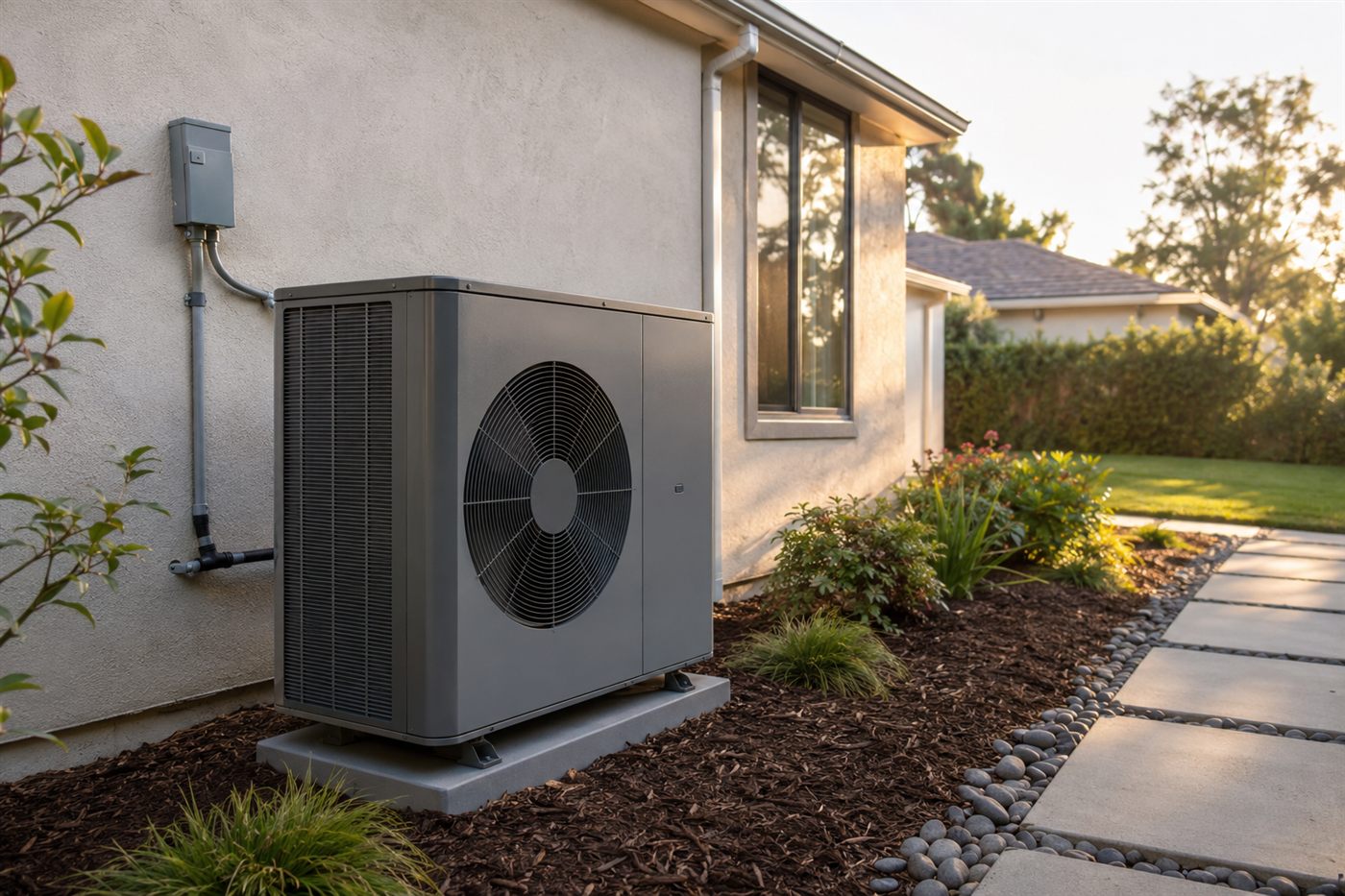
A heat pump is a single electric system that replaces both your furnace and your AC. Instead of burning fuel to make heat, it moves heat — pulling warmth out of your home in summer and into it in winter. Because moving heat takes far less energy than generating it, modern heat pumps are dramatically more efficient than the gas-furnace-plus-AC systems most homes still run.
The practical case: one modern system replaces two aging ones, you drop the gas burn for heating, and you get more even comfort year-round. Whether it lowers your specific bill depends on your home, your rates, and your current equipment — no honest company promises an exact number — but the efficiency jump is real.
Signs it's time to look at your HVAC
- Your furnace or AC is 12+ years old
- Summer electric bills are painful even with a conservative thermostat
- Some rooms never quite cool down or warm up
- The system is loud, cycles constantly, or needs frequent repairs
- You're on natural gas and watching gas rates climb
The timing trap most homeowners fall into
Here's the thing about HVAC: you're going to replace it eventually — the only question is whether you do it on your schedule, with time to compare options and check rebates, or in an emergency during the first heat wave of summer, when every company in town is booked and you'll take whatever's on the truck. Planning ahead is how you end up with the right system at the right price.
Rebates you should know about in 2026
While the federal energy tax credits expired at the end of 2025, California utilities kept going — and some increased heat pump rebates for 2026:
- Sacramento (SMUD): up to $3,000 for a gas-to-electric heat pump HVAC conversion, up to $4,000 for a heat pump water heater
- Southern California (SCE): rebates for ducted and ductless heat pumps
- San Diego (SDG&E) and Bay Area programs (SJCE, BayREN, SVCE) offer their own incentives
Important: most rebates (SMUD is a clear example) require installation by a contractor in the utility's participating network, and amounts are subject to funding and change. A participating licensed contractor confirms current eligibility for your address.
Find Out What Your Home May Qualify For
Answer 5 quick questions and book a free, no-obligation assessment with a licensed contractor.
Check My Eligibility →Frequently asked questions
Will a new HVAC system actually lower my bill?
A modern, efficient system uses less energy than aging equipment, which is where savings come from. We never promise a specific dollar figure — actual results depend on your home, usage, and rates. A free assessment shows your realistic options.
Heat pump or gas furnace — which is better?
For most California homes, a heat pump is the more efficient all-in-one choice and the one utilities are incentivizing. The right answer for your home depends on your climate zone, ductwork, and electrical panel — that's what the in-home assessment checks.
Do I need a participating contractor for the rebate?
Often, yes. Many utility rebates only pay when the work is done by a contractor enrolled in their network. Confirm this before signing with anyone.
This article is for general informational purposes only. Rebate amounts are as reported by their respective utilities for 2026 and are subject to program terms, eligibility, and funding availability, and may change without notice. No specific savings, program approval, or free equipment is promised or guaranteed. Potential savings depend on individual home conditions, energy usage, and the upgrades selected. California Home Energy Center is a private company and is not affiliated with any government agency or utility provider.