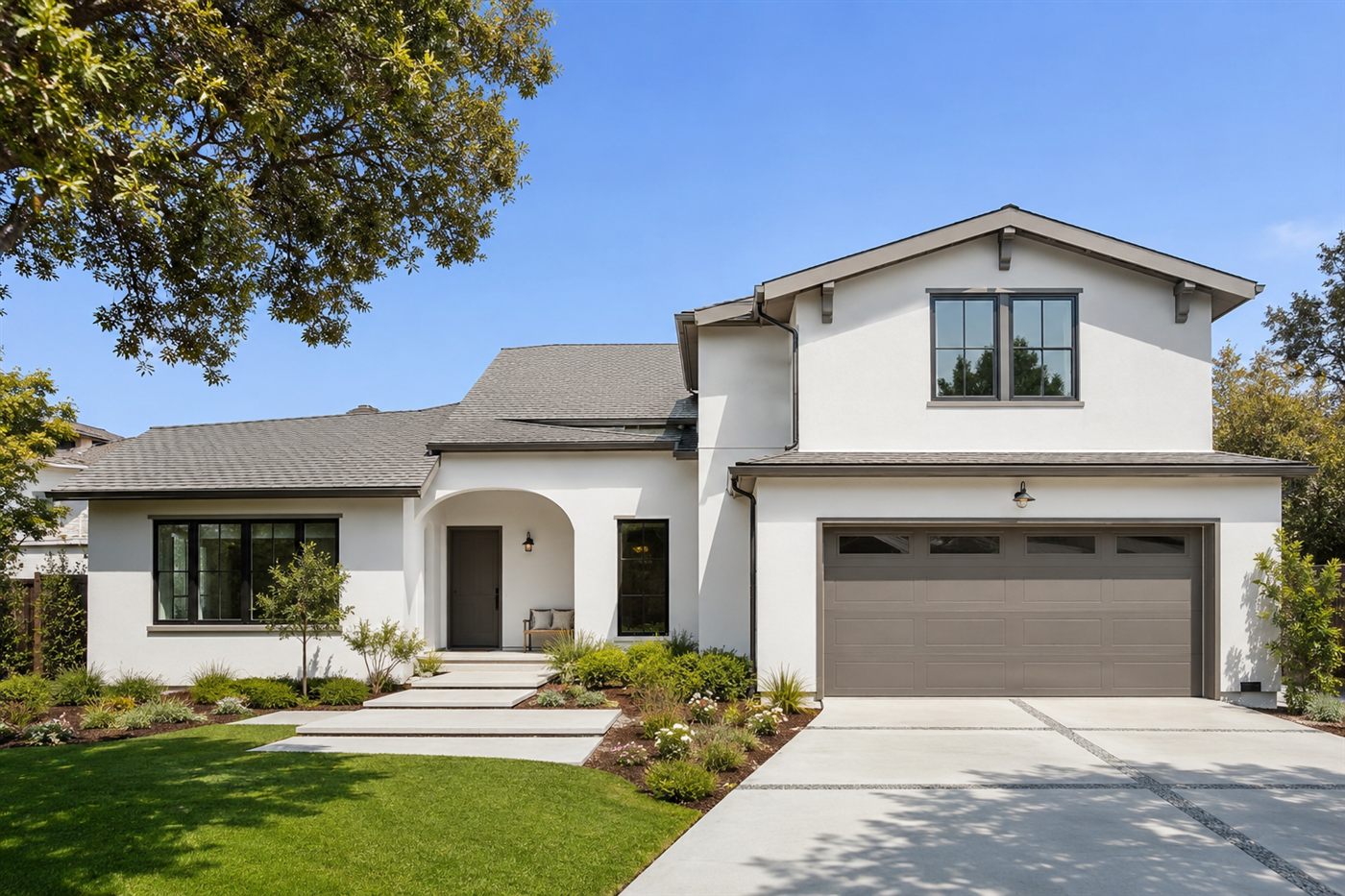
Exterior paint is easy to think of as purely cosmetic — but in California's intense sun, it's doing real work. A quality coating is your home's first line of defense against UV, heat, and moisture. When it fails, the materials underneath start to suffer. So a repaint is part protection, part curb appeal, and part smart maintenance.
What good exterior paint actually does
- Shields siding and stucco from relentless California UV that fades and degrades surfaces
- Seals out moisture that can cause rot, cracking, and mold
- Protects your investment — repainting is far cheaper than replacing damaged siding
- Transforms curb appeal — nothing refreshes a home's look faster
Signs it's time to repaint
- Fading, chalking, or color loss — especially on sunny south/west walls
- Peeling, cracking, or bubbling paint
- Exposed or bare patches of siding or stucco
- Hairline cracks in stucco that need sealing
- It's simply been 7–12+ years since the last coat
A quiet bonus: lighter exterior colors reflect more sunlight than dark ones, which can help a wall absorb a little less heat. It's not a substitute for insulation or a cool roof, but on a sun-blasted California elevation, color choice is a small factor worth considering.
Why professional prep matters
The difference between paint that lasts 5 years and paint that lasts 12 is almost always preparation: proper cleaning, scraping, priming, and sealing before a drop of finish coat goes on. Quality materials matter, but prep is what makes them last against California weather.
See What Your Home May Qualify For
Answer 5 quick questions and book a free, no-obligation assessment with a licensed contractor.
Check My Eligibility →Frequently asked questions
How often should I repaint in California?
Often every 7–12 years, depending on the material and sun exposure. South- and west-facing walls tend to break down faster under intense California sun.
Is exterior paint worth the cost?
Beyond looks, it protects your siding and stucco from expensive damage and is one of the most cost-effective curb-appeal upgrades. Prep quality is what makes it last.
Can paint color affect heat?
Lighter colors reflect more sunlight, so a wall may absorb slightly less heat. It's a minor factor compared to insulation or a cool roof, but worth considering.
This article is for general informational purposes only. No specific savings, program approval, or free equipment is promised or guaranteed. California Home Energy Center is a private company and is not affiliated with any government agency or utility provider.